

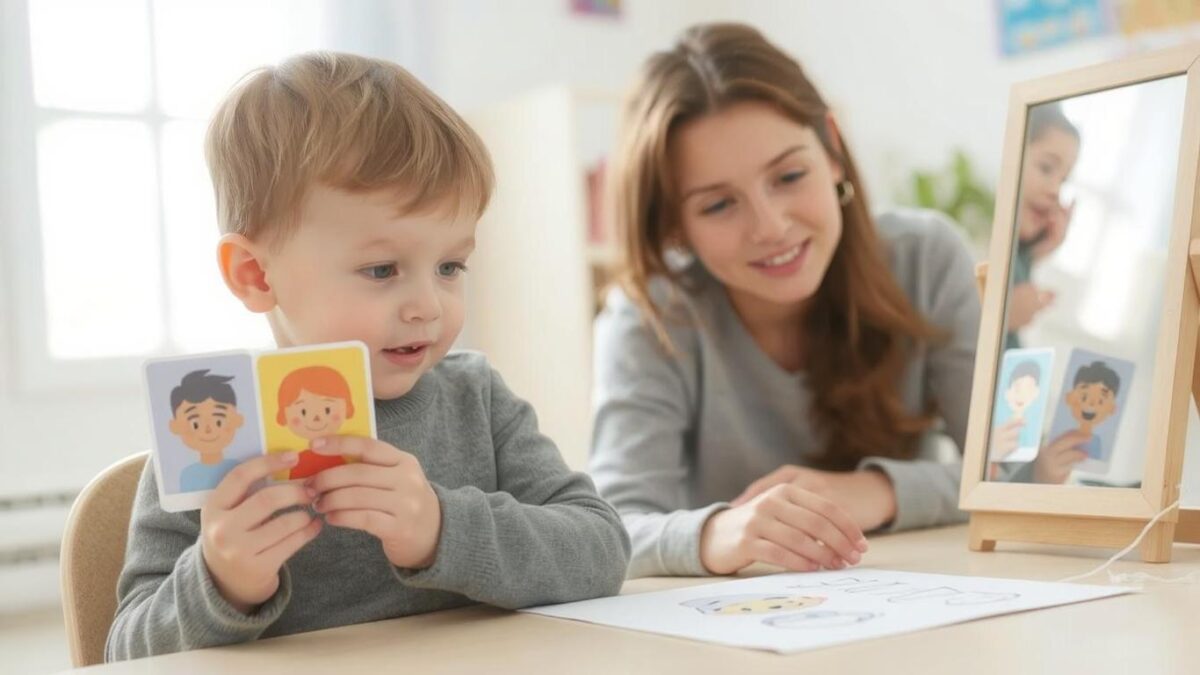
The world can feel challenging when you don’t understand emotions, especially for children with autism. Imagine seeing a smile but not recognizing happiness. Or feeling frustrated but not knowing how to express it. For kids on the spectrum, emotion recognition isn’t just a skill—it’s a bridge to connection, confidence, and social success.
The good news? Learning emotions doesn’t have to be stressful. With the right activities, children with autism can explore feelings in a fun, engaging, and supportive way. This guide shares simple, creative strategies to help kids recognize, express, and respond to emotions while making learning enjoyable. But before that, let’s know why it matters.
Emotion recognition helps kids:
Understand others – Recognize when someone is happy, sad, or upset.
Express themselves – Share their feelings in healthy ways.
Make better social choices – Respond appropriately in friendships and group settings.
Build confidence – Feel more secure in daily interactions.
By teaching these skills early, we give children tools for life, helping them navigate stress, build relationships, and engage more fully in the world.
Want to keep engagement high? Try these playful ideas:
Playdough Faces – Mold happy, sad, or silly expressions.
Music & Movement – Dance to show how different songs make them feel.
Emotion Art Journals – Draw or paint their daily feelings.
Matching Games – Pair emotions with colors or weather (e.g., sunny = happy).
Emotion Dice – Roll and act out the feeling that comes up!
These activities turn learning into play, helping kids absorb emotions naturally.
Teaching emotion recognition doesn’t have to be hard. With patience, creativity, and the right strategies, children with autism can grow more confident in understanding and expressing their feelings.
Jeevaniyam believes in nurturing emotional and social skills through compassionate, individualized care. If you’re looking for expert guidance in supporting your child’s development, we’re here to help. Because every child deserves to feel understood.


 About Us