



“I knew my son was bright, he loved stories, asked endless questions, and remembered the tiniest details. But when it came to reading and writing, he struggled more than other kids his age. Letters would dance on the page, numbers didn’t make sense, and homework time often ended in tears. As a parent, I felt helpless — how could such an intelligent child find school so painful? That’s when I learned it wasn’t laziness or lack of effort… it was Specific Learning Disorder.”
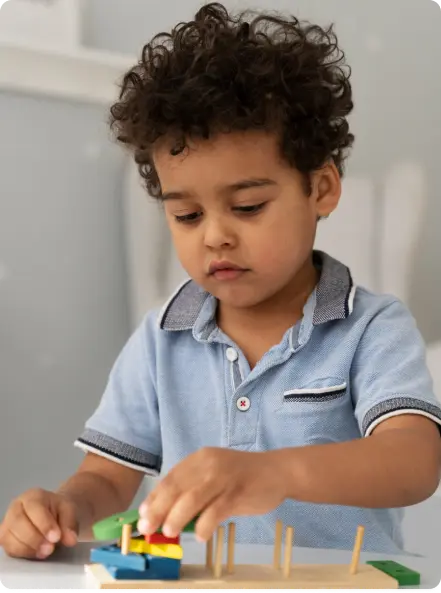

Learning challenges don’t define intelligence. Our Jeevashakthi model integrates educational interventions, Ayurveda for concentration and memory, occupational and speech therapy, and AI-assisted learning tools. We help children with dyslexia, dysgraphia, or dyscalculia rediscover the joy of learning, while supporting families and schools in creating a nurturing academic environment.
 Modern Medicine Integration
Comprehensive assessments and diagnosis of dyslexia, dysgraphia, and dyscalculia.
Speech & Language Therapy
Improving phonological awareness, vocabulary, and language comprehension.
Ayurveda
Natural therapies to support concentration, memory, sleep, and reduce anxiety.
Remedial Education
Individualized support for reading, writing, and math.
Occupational Therapy
Enhancing handwriting, fine motor skills, spatial awareness, and organization.
Speech & Language Therapy
Improving phonological awareness, vocabulary, and language comprehension.
Cognitive Training
Exercises to strengthen working memory, attention, and executive functioning.
Behavior Therapy
Managing frustration, low self-esteem, and emotional regulation.
Counseling & Psychotherapy
Emotional support, confidence-building, and addressing anxiety/depression.
Social Skills Training
Building peer interaction, communication, and classroom participation.
Music Therapy
Alternative learning channels to boost creativity, focus, and emotional balance.
AI-Powered Learning Tools
Engaging academic practice with measurable progress through adaptive technology.
Diet & Lifestyle Guidance
Personalized nutrition and routines to support focus, energy, and well-being.
Family & School Training
Collaborative strategies for parents and teachers to ensure consistency at home and school.
Long-Term Care
Ongoing support for academic, social, and emotional growth, ensuring a smooth transition to higher education and career readiness.

SLD is linked to differences in how the brain processes language, numbers, or symbols. It is not caused by poor teaching, low intelligence, or laziness. Genetics, prenatal factors, or early developmental challenges may contribute.
No. SLD, ADHD, and autism are different conditions, though they may sometimes co-occur. A child with SLD mainly struggles with academic skills (reading, writing, math), while ADHD affects attention and behavior, and autism affects communication and social interaction.
SLD does not go away on its own, but with early intervention, therapies, and ongoing support, children can learn strategies to overcome challenges and thrive academically and socially.
Teachers can provide extra time, break lessons into smaller steps, use visual aids, allow oral responses instead of written ones, and collaborate with special educators. Patience, encouragement, and flexibility are key.
Yes. Constant struggles with schoolwork can lead to frustration, anxiety, or low self-esteem. Emotional support, counseling, and celebrating small successes help children stay motivated and confident.


 About Us