
Play is more than just fun—it’s a crucial element in speech therapy for children with autism. Incorporating play into therapy can make learning more engaging and effective. Here’s how play can enhance speech therapy and support communication development for children with autism.
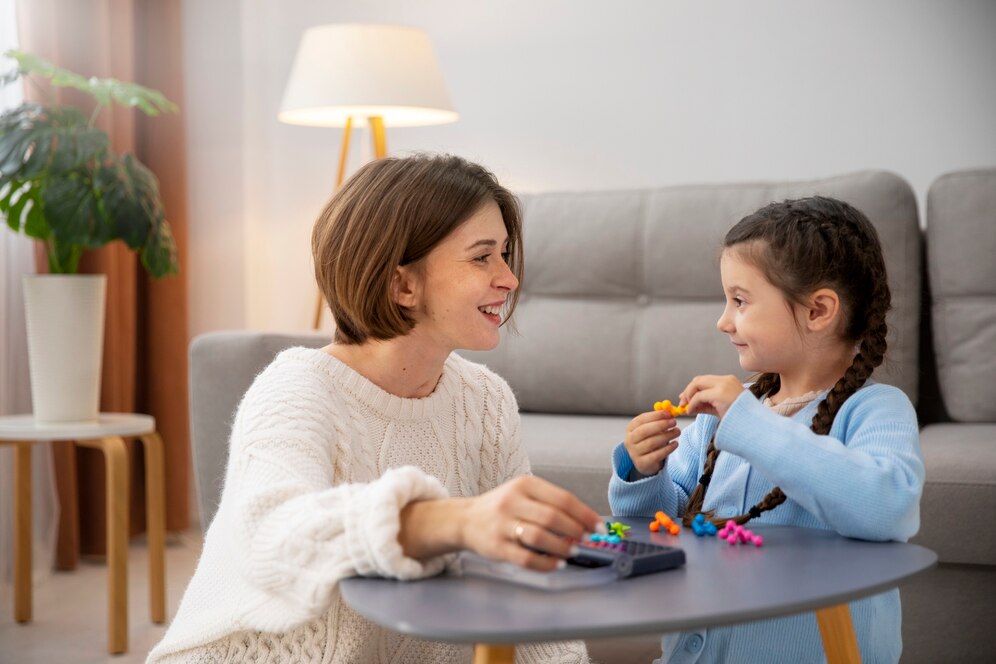
Playtime provides a natural setting for children to use and practice communication skills. Through play, children are more likely to express themselves, ask for items, and engage in conversations. This creates opportunities for real-life practice of speech and language skills in a relaxed environment.
Play often involves interacting with others, which can help children with autism learn social cues and improve their social skills. Cooperative games, role-playing, and interactive activities help children practice turn-taking, sharing, and responding to others in a social context.
Children are more motivated to participate in activities they find enjoyable. Incorporating their favourite toys or games into speech therapy can increase their enthusiasm and willingness to engage in communication practice. This makes the learning process more enjoyable and less of a chore.
Role-playing allows children to act out different scenarios, such as pretending to be a chef or a doctor. These activities encourage the use of new vocabulary and sentence structures, helping children practice language in a context they can relate to.
Toys that require communication, like dolls, action figures, or board games, can be used to practice language skills. For instance, playing a game that involves following directions or describing actions can help reinforce vocabulary and grammar.
Sensory activities, such as playing with playdough or sand, can be combined with language-building exercises. These activities often provide opportunities for children to describe what they’re doing, express preferences, and engage in conversation.
Using picture books and storytelling in play helps children practice narrative skills. Children can describe pictures, create their own stories, or answer questions about the story, enhancing their ability to use language in a structured way.
Play is a powerful tool in speech therapy for children with autism. It provides a natural, enjoyable way to practice communication skills, improve social interactions, and increase motivation. By integrating play into therapy sessions and daily routines, you can help support your child’s speech and language development in a fun and engaging way. If you’re working with a speech therapist, consider discussing how to incorporate play-based strategies into your child’s therapy plan for the best results.


 About Us