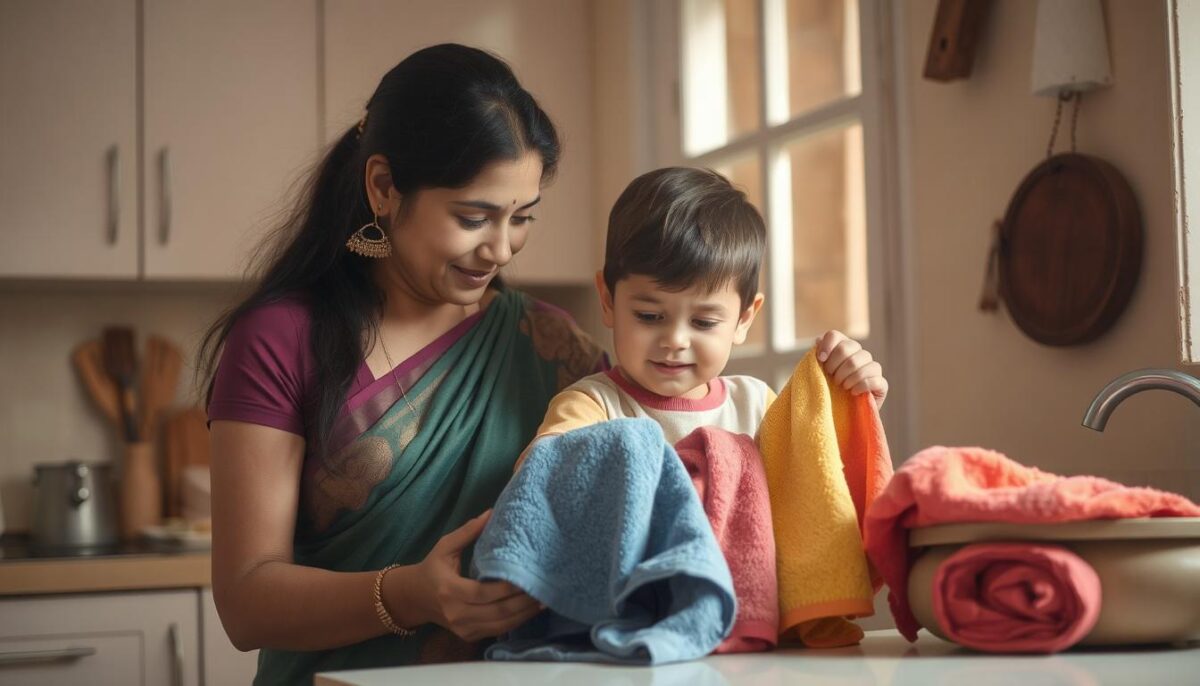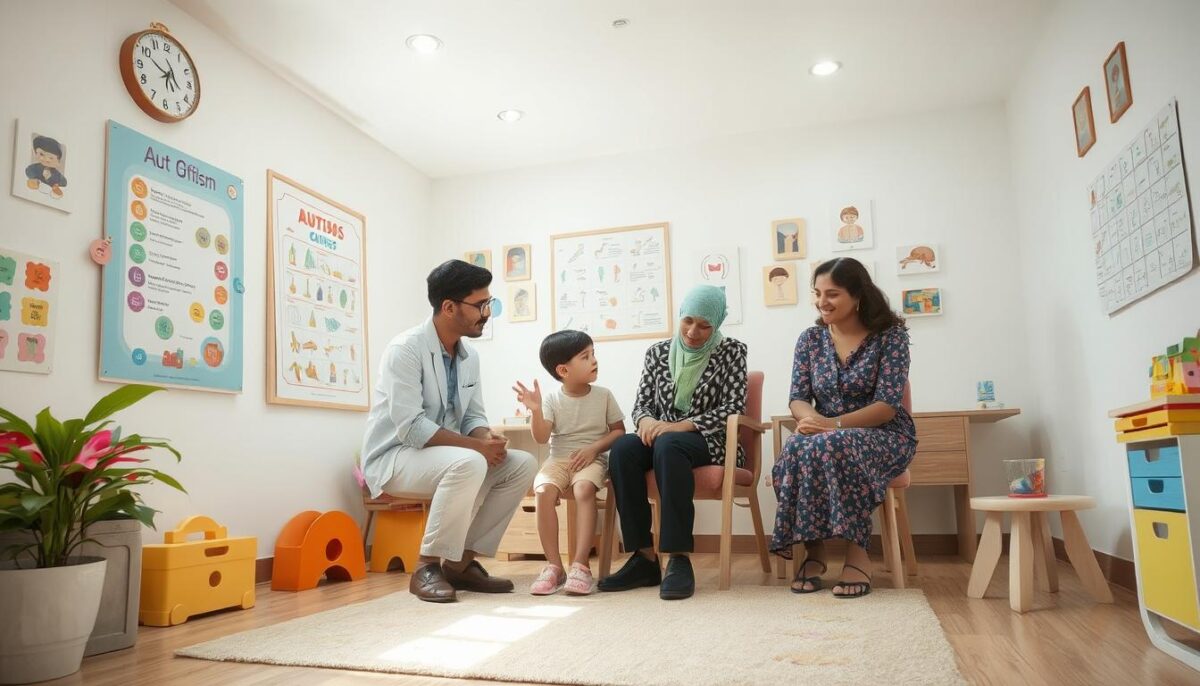

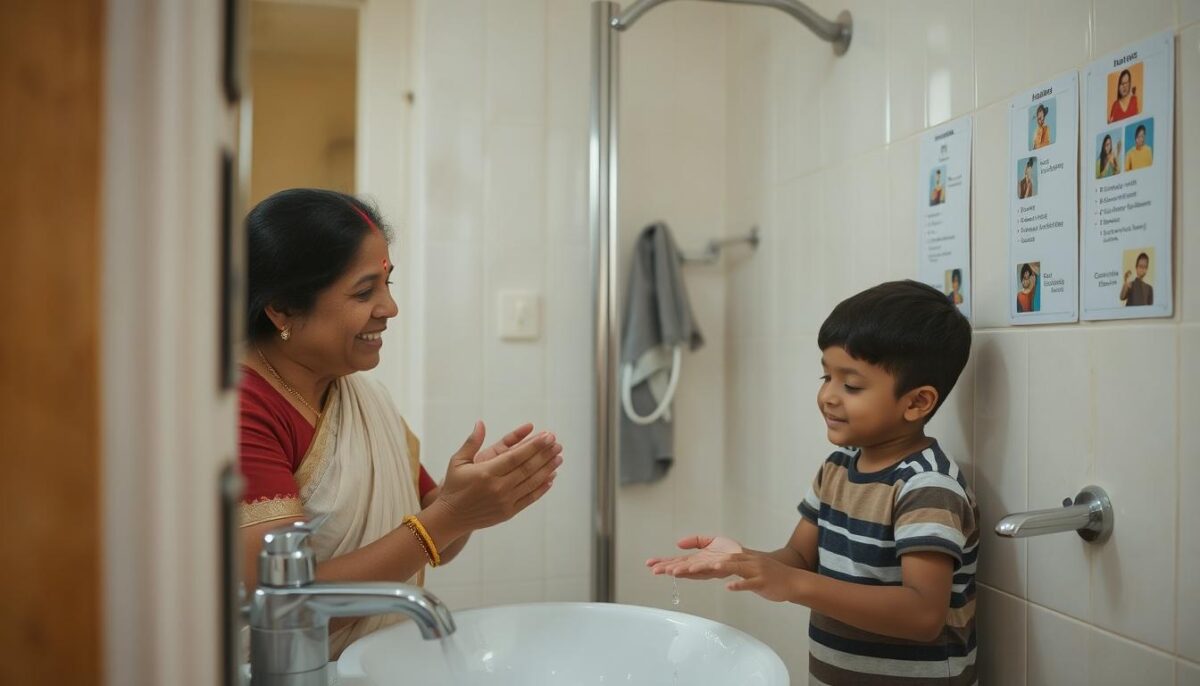
Turning an ordinary task into a structured, skill-building activity is where the magic happens in the homes of children with autism. Coming back to Saranya and her son, Aryan, who loves routines and visual input, Saranya wanted Aryan to master the simple acts. Things are going to be a bit more detailed than our previous blogs. So, stay tight.
As an example, let’s take the simple task of washing hands independently, indeed, a critical self-care skill. Here is the step-by-step process Saranya used, and how you can apply it to any everyday activity. We are not taking handwashing because it’s complex, but rather to make it more relatable for everyone.
The biggest mistake caregivers make is assuming a task like “washing hands” is one step. For Aryan, this was ten steps! Saranya first broke the task down into the smallest, most manageable parts.
| Total Task | Simple, Individual Steps |
| Washing Hands | Walk to the sink. Turn on the cold water. Wet hands. Pump soap once. Rub hands for 10 seconds. Rinse soap off. Turn off the water. Get one towel. Dry hands. Hang up the towel. |
Your takeaway: Start by writing down every single step of your chosen activity (e.g., getting dressed, making a snack). This creates a clear roadmap for both you and your child.
Aryan responds best to visuals. A long verbal list of instructions would overwhelm him.
Your takeaway: Replace verbal lists with visual schedules, social stories, or ‘First/Then’ boards. Use short, direct commands. Say what you want your child to do, not what you want them to stop doing (e.g., “Feet on floor” instead of “Don’t jump”).
When Aryan first started, he needed help. Saranya used prompting, giving him just enough support to succeed, and then gradually reducing it.
Your takeaway: Always start with the least intrusive prompt necessary. Once your child is successful two or three times, fade the prompt by taking a small step back. The goal is independence!
The magic ingredient in all behavior-based learning is positive reinforcement. It motivates the child and makes them want to try the activity again.
Your takeaway: Find what truly motivates your child—it could be a special snack, a favorite activity, or even an enthusiastic tickle. Deliver the reward right away, and be genuine with your praise.
It won’t always be a smooth process, and that’s okay. Here’s what to do when challenges arise:
| Challenge | Saranya’s Solution |
| Refusal/Meltdown | Saranya respected Aryan’s need for a break. She used a “break card” visual, allowed him five minutes of downtime, and then tried again with a simpler step. Never reinforce the meltdown, but calmly reinforce the return to the task. |
| Not Getting It | She realized “Rub hands for 10 seconds” was too abstract. She put a small sticker on the mirror and told him to rub his hands until he could see the sticker through the soap suds. She broke the step down further. |
| Giving Up | Saranya praised the effort over perfection. “I love how you tried to turn on the water!” This taught Aryan that perseverance, not just the final result, was valued. |
Saranya didn’t conquer all of Aryan’s life skills at once. She started with the hand-washing routine, and once that was mastered, she moved on to brushing teeth, using the same systematic approach.
The brilliance of this method is that it uses your existing life as the classroom. Choose one activity, be it making the bed, setting out breakfast, sorting colors, and apply these four steps. The consistency you build in these small moments will blossom into life-changing independence for your child.


 About Us